When the people who help everyone else are suddenly the ones needing help, the system can feel overwhelming.
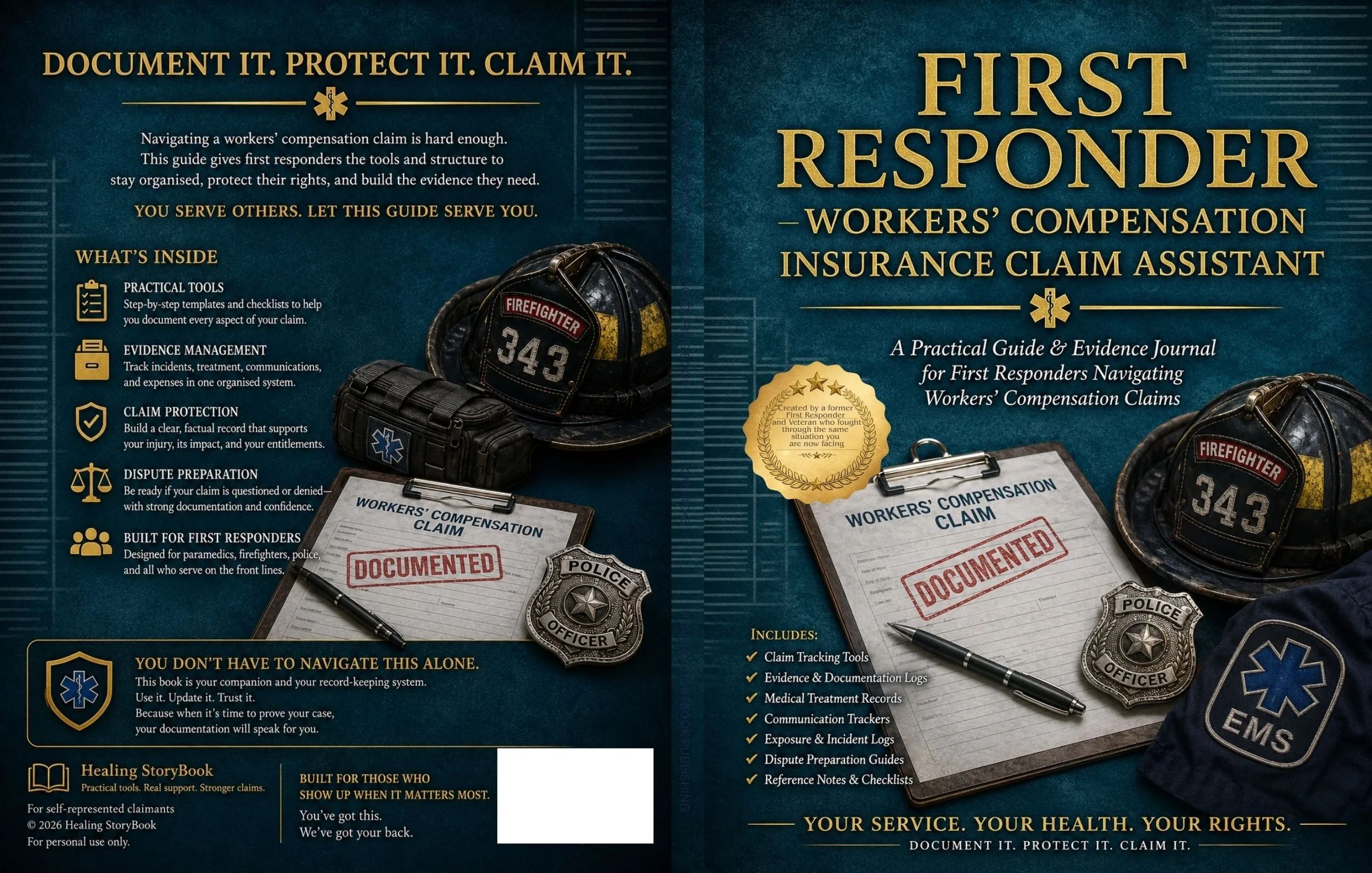
This practical evidence journal and claim support guide was created specifically for first responders navigating workers’ compensation, psychological injury claims, cumulative trauma exposure, PTSD-related claims, and workplace injury disputes.
Designed for police, paramedics, firefighters, emergency services personnel, corrections officers, military members, dispatchers, and other high-exposure occupations, this structured workbook helps you organise, document, and protect your claim step by step.
Whether you are dealing with:
psychological injury,
cumulative trauma,
operational stress exposure,
workplace injury,
insurer disputes,
medical evidence collection,
or return-to-work complications,
this guide provides practical tools to help you stay organised during one of the hardest periods of your life.
Inside you’ll find structured templates and guided logs for:
Claim tracking & checklists
Evidence & documentation logs
Medical treatment records
Communication trackers
Incident & exposure records
Dispute preparation support
Functional impact tracking
Critical incident exposure documentation
Mental health symptom logs
Timeline & evidence building tools
This book was created for self-represented claimants who need a clear, organised way to document their claim and protect their rights.
You do not need to be a lawyer to start building strong evidence.
You just need a system.
Document it. Protect it. Claim it.
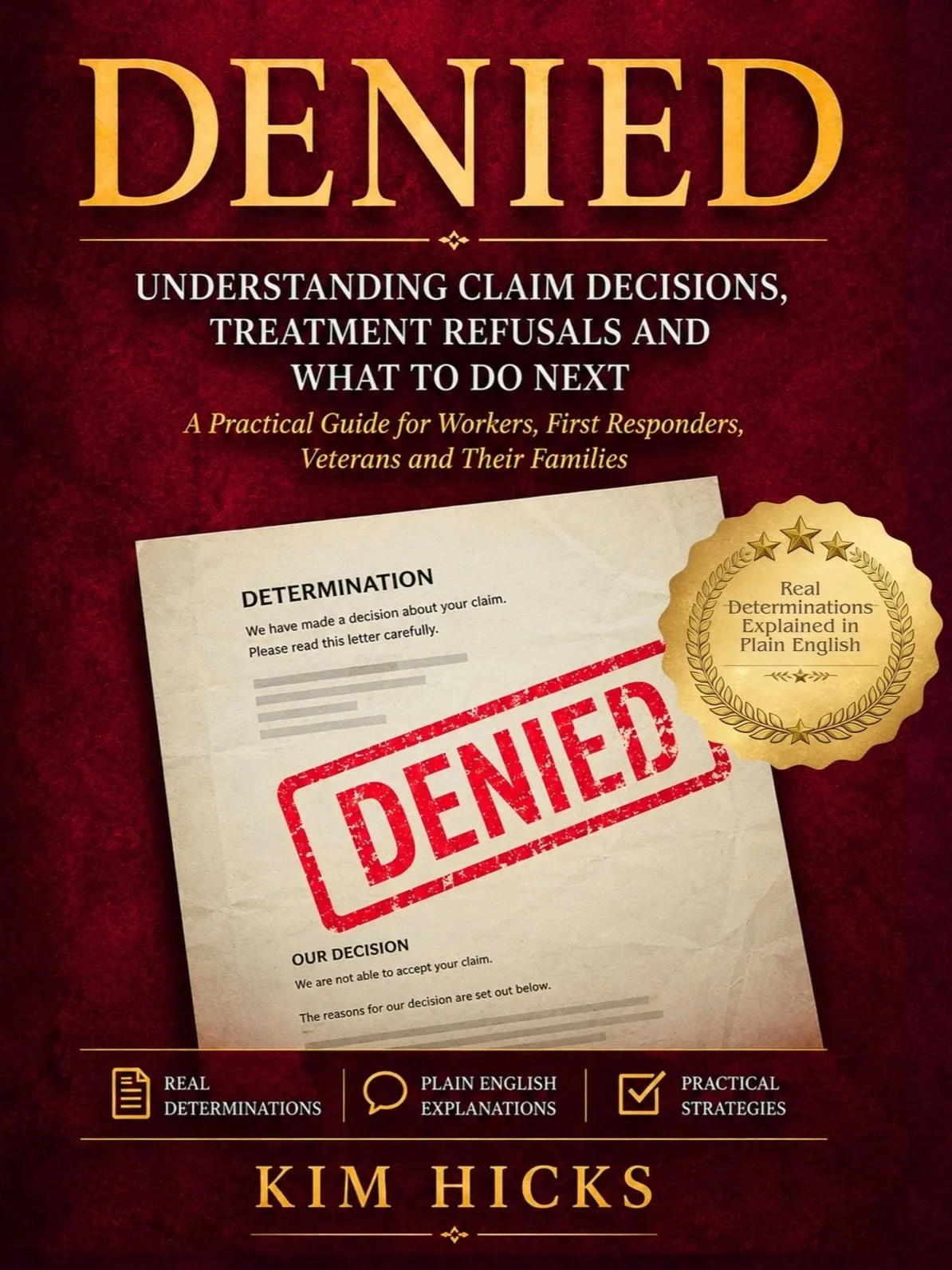
DENIED:
Understanding Workers Compensation Claim Decisions, Treatment Refusals and What To Do Next
Been told there is "insufficient evidence"? Had treatment declined because it was considered "not reasonably required"? Confused by phrases like "no causal relationship established" or "the evidence does not support"? You are not alone.
Most people read a determination emotionally. That's normal. The problem is that determination letters are written in administrative, legislative, and clinical language—not plain English. The result is confusion, frustration, and often the feeling that you've reached the end of the road.
DENIED was written to help you understand what the decision-maker was actually saying.
Using real determination examples, practical explanations, workbook exercises, and plain-English breakdowns of common determination language, this book helps you:
• Understand how compensation determinations are made
• Identify the real reason a claim, treatment, or request was declined
• Recognise common evidence gaps
• Understand causation, medical evidence, specialist reports, and treatment justification
• Learn what decision-makers need to see
• Build stronger chronologies, communication records, and evidence files
• Prepare more effective reconsideration requests
• Organise your claim and track important deadlines
Inside you'll find:
Real determination breakdowns from actual claims (de-identified)
Common determination phrases translated into plain English
Evidence gap analysis and response strategies
Questions to ask your doctor and specialist
Chronology templates and communication logs
Treatment justification examples
Review and reconsideration preparation tools
Practical workbook exercises throughout
DENIED is a practical guide for workers, first responders, veterans, and their families who are trying to understand claim decisions, treatment refusals, and compensation determinations.
This is not a legal textbook.
It is not legal advice.
It is a practical resource written by someone who has lived through the process and learned, often the hard way, that a determination is a decision—not the end of the road.
If you've ever sat at a kitchen table staring at a determination letter wondering, "What do I do now?" this book was written for you.
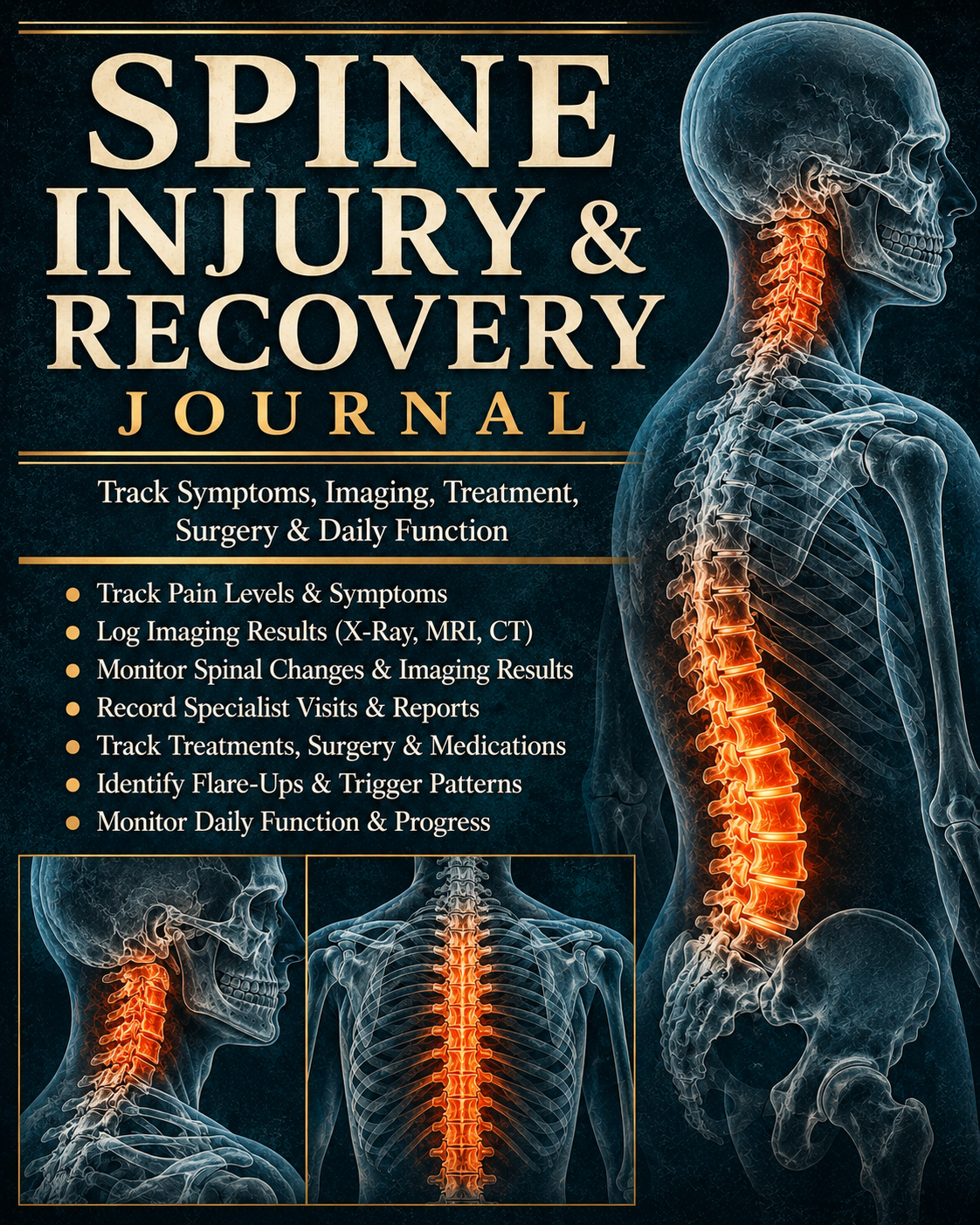
Spine Injury & Recovery Journal
Living with a spinal injury, chronic spine condition, or recovering from surgery can make it difficult to keep track of symptoms, appointments, imaging results, treatments, medications, and day-to-day progress.
The Spine Injury & Recovery Journal has been designed to help you organise your medical information in one place, monitor changes over time, and create a clear record of your recovery journey.
Whether you are managing spinal stenosis, spondylolisthesis, spondylosis, degenerative disc disease, chronic neck or back pain, or recovering from spinal surgery, this journal provides structured tools to help you stay informed, prepared, and organised.
Inside You'll Find:
Pain and symptom tracking
Daily function and mobility monitoring
Imaging records (X-Ray, MRI & CT)
Specialist appointment logs
Treatment and medication tracking
Surgery and recovery records
Flare-up and trigger pattern identification
Progress reviews and notes
Educational information about common spinal conditions
Space to maintain a comprehensive health record
Designed to support communication with healthcare professionals while helping you better understand your condition and recovery.
Track symptoms. Monitor progress. Stay organised.
Supporting Members Through Recovery
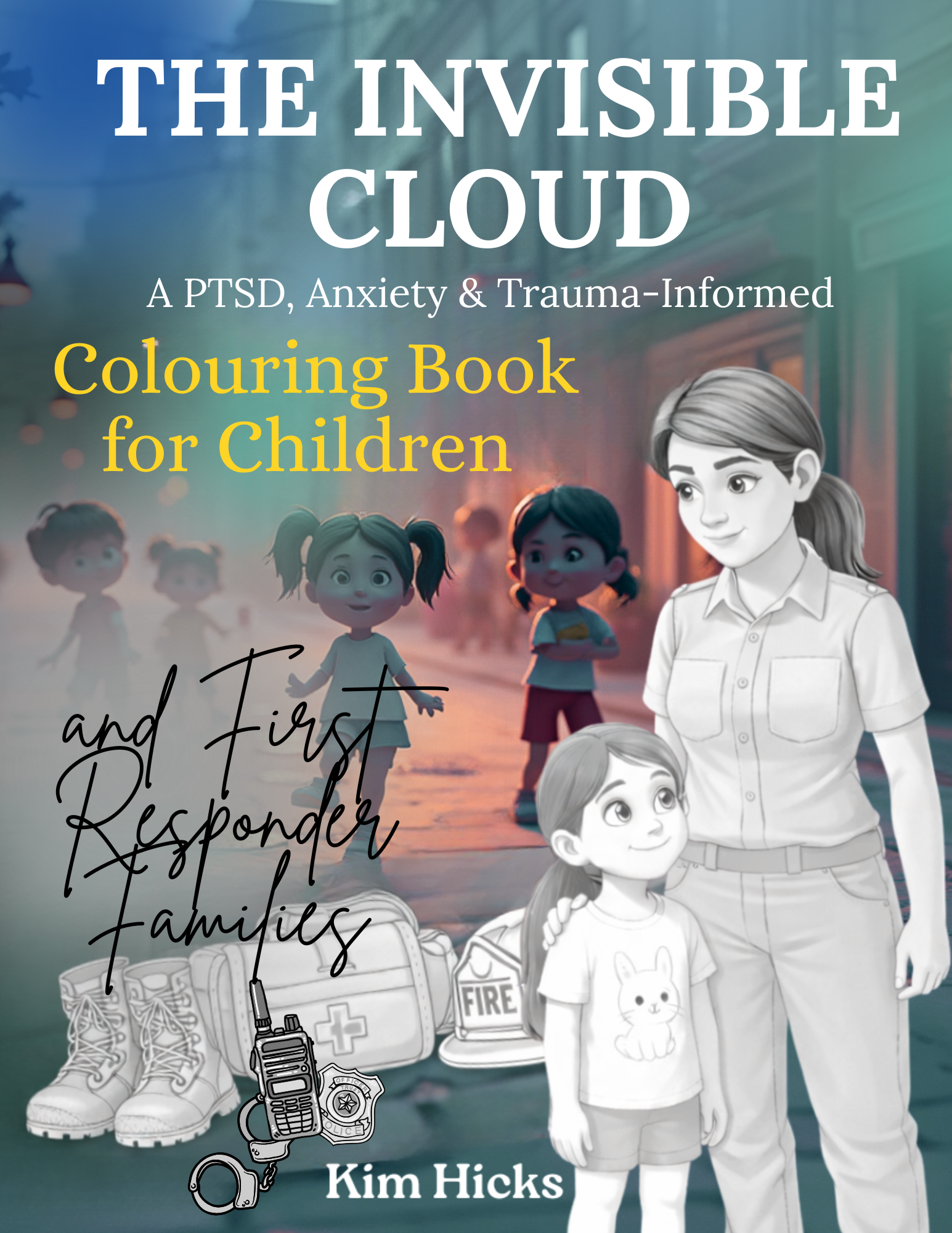
These resources have been developed from lived experience and are designed to assist first responders and their families navigating PTSD, psychological injury, workers' compensation, recovery, treatment and return-to-work challenges.
Police associations, unions, welfare teams, peer support programs and first responder organisations may wish to make selected resources available directly to members as part of their wellbeing, recovery or support initiatives.
Organisational pricing may be available for larger orders.
For enquiries regarding member resource packs, organisational purchases, media opportunities or welfare program inclusion, please use the contact button below.
If your organisation is exploring ways to support members affected by PTSD, psychological injury or workers' compensation challenges, I would welcome the opportunity to discuss how these resources may assist.
Kim Hicks